
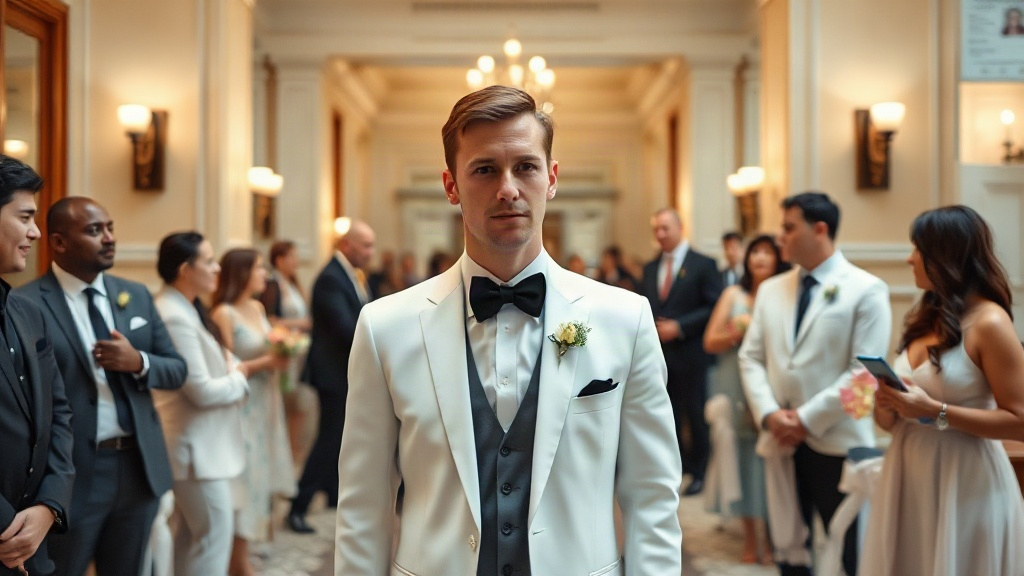
White Suit Wedding Guest Toronto: Style Rules That Actually Work
Wearing a white suit to a Toronto wedding feels like a bold move — and it is. The real question is whether it reads as confident style or an accidental upstaging of the couple. That depends on the wedding, the season, and how you build the outfit.
Quick answer: A white suit can work for a Toronto wedding guest, but only in specific settings. A daytime summer ceremony, a garden or waterfront venue, or a creative-dress-code reception are the safest bets. For evening black-tie events, a church ceremony, or anything with a formal dress code, choose another color.
This guide explains when white works in Toronto, how to style it so it looks intentional, and which mistakes guests most often make. You will finish knowing whether to wear the suit and how to pull it off.
What is White suit wedding guest Toronto?
The phrase describes a wedding guest in Toronto who chooses a white suit — jacket and trousers in white, ivory, or off-white — instead of the usual navy, charcoal, or gray. Toronto has its own context for this look. Summer weddings at venues like the Toronto Islands, Casa Loma’s gardens, or a Distillery District loft create natural openings for lighter tailoring. So do weddings with dress codes like “garden party,” “summer cocktail,” or “creative black tie.”
A white suit is not one garment. It is a category that includes several distinct options:
- Crisp white linen or cotton-linen: breathable and relaxed, best for outdoor daytime events in July and August.
- Ivory or cream wool: dressier, with a slight warmth that reads more formal than pure white.
- Off-white with texture: seersucker, a subtle herringbone, or a slubby weave that makes the color look deliberate rather than flat.
- White dinner jacket with black trousers: a classic warm-weather alternative to a tuxedo, worn for evening events with a formal dress code.
The distinction matters because each option sends a different signal. Head-to-toe bright white in linen says “outdoor summer celebration.” An ivory wool suit says “dressed up with a point of view.” A white dinner jacket says “formal, but not a tuxedo.”
Toronto adds a practical layer. Summer here brings humidity, sudden thunderstorms, and venues that mix air conditioning with open patios. Fabric weight and breathability matter as much as color, and a suit that photographs well indoors may wilt by 4 p.m. outdoors.
A white suit is often a lighting and fabric decision as much as a color one. In Toronto’s summer humidity, a lightweight weave and a cut that lets air move will do more for how you look than the shade of white itself.
Takeaway: White suit coverage runs from relaxed linen to an ivory wool or a dinner jacket. Match the fabric and formality to the venue before you decide on shade.
Why White suit wedding guest Toronto matters
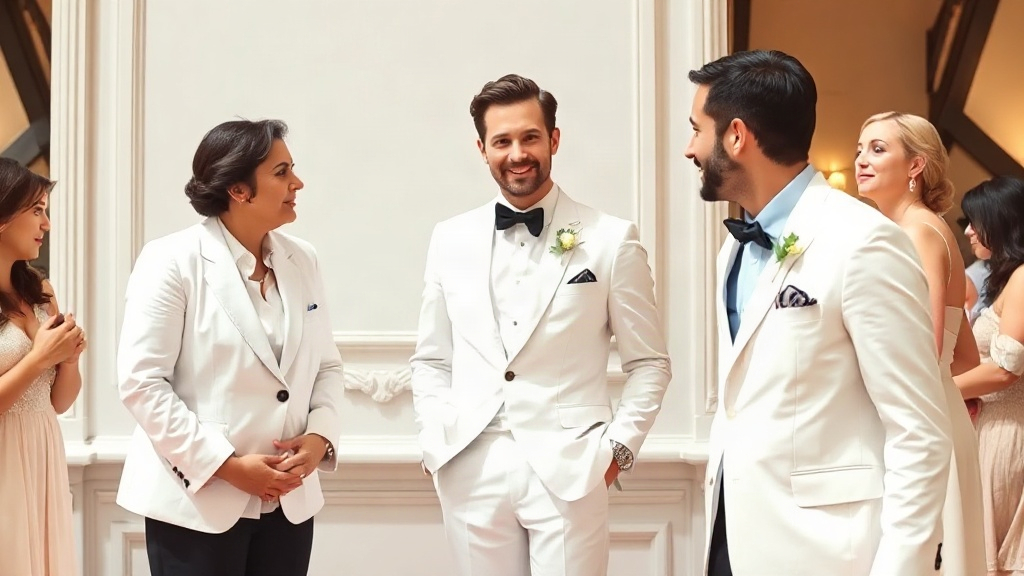
Wedding style choices carry social weight, and white is the most loaded color on the guest list. Many North American weddings reserve white for the bride or couple, and some Toronto couples actively request that guests avoid it in the dress code. Showing up in a full white suit without thinking it through can read as a statement about you rather than a celebration of them.
Get it right, and the payoff is real. A well-chosen white suit stands out in group photos, looks sharp in outdoor light, and shows effort in a way that a safe navy suit sometimes does not. Toronto’s summer wedding season rewards guests who dress for heat without looking casual.
The stakes go beyond one outfit. Guests travel between ceremony, cocktail hour, and reception, often across the city. A suit that absorbs heat, shows sweat, or creases in transit looks worse by dinner. Practical choices reduce that risk.
There is also a cost dimension. A white suit is harder to wear again than a navy one, so the purchase has to earn its place in a wardrobe. Renting is an option for one-off events. Buying makes sense if you attend several summer weddings or dress up for work events.
Timing matters too. Toronto wedding season peaks from June through September, when daylight lasts late and photos run into golden hour. White reflects light beautifully in those settings. The same suit under harsh conference-room lighting at an indoor winter wedding can look flat.
Takeaway: Dress-code respect and practical summer performance are the two reasons this choice needs deliberate planning, not just a bold instinct.
Best practices
Start with the invitation and the venue, then build the outfit around them. These steps keep a white suit guest looking intentional.
Confirm the dress code before anything else
Read the dress code literally and ask the couple if it is vague. “Garden formal” and “cocktail” leave room for a white suit; “black tie” and “black tie optional” usually do not, unless you wear a white dinner jacket with black trousers. If the couple has a wedding website with color guidance, follow it.
Choose the right white for the season
For a July ceremony at an outdoor venue, go with linen or a cotton-linen blend in bright white. For a September evening reception, ivory or cream wool looks richer. Skip heavy pure-white wool in August; it traps heat and shows every crease.
Anchor the suit with contrast
A white suit works because everything around it provides contrast. Strong options include:
- A light blue or pale pink shirt for daytime.
- A navy or black knit tie for a modern edge.
- Brown leather loafers or suede shoes for outdoor events.
- Black oxfords and a dark tie for evening formality.
Check the fit in daylight
White shows wrinkles, pulling, and poor tailoring more than dark colors. Try the full outfit on in natural light a week before the wedding. Sit down, raise your arms, and walk a few steps to check how the fabric moves.
Toronto evenings cool off fast, and banquet halls run cold. A navy blazer or a light cardigan over a white suit adds warmth and gives you a second look for the reception.
Plan for real-world conditions
Book a car or plan transit so the suit does not crease on a crowded streetcar. Carry a stain pen and a spare pocket square. If the ceremony is outdoors on grass, choose shoes with a slight heel or a rubber sole to avoid sinking.
Takeaway: The white suit succeeds when the dress code allows it, the fabric suits the season, and contrast does the styling work.
Common mistakes to avoid
Most white suit failures come from predictable errors. Avoiding them is easier than fixing them on the day.
Wearing pure white to a ceremony where it competes
If the couple has not explicitly welcomed white, a full white suit risks looking like a bid for attention. A safer route: wear the white jacket with contrasting trousers, or choose ivory, stone, or a textured off-white that clearly separates you from bridal white.
Ignoring the difference between day and night
Bright white linen at a black-tie evening reception looks out of place. A formal wool suit at a beachside afternoon ceremony looks overdressed. Match the formality of the fabric to the time of day and the event style.
Skipping the fabric test
Cheap white fabric can be transparent in sunlight, showing the lining or your shirt through the jacket. Hold the fabric up to a window before buying. A slightly heavier weave or a lined jacket solves the problem.
Forgetting the details
White amplifies everything nearby. A yellowed shirt, scuffed shoes, or a wrinkled pocket square stands out immediately. Fresh white or pale blue shirting, clean leather, and a pressed suit are non-negotiables.
Overlooking the shoes and accessories
Dark shoes ground a white suit; white shoes often tip it into costume territory. Brown suede, tan loafers, or black oxfords are dependable. Keep the belt, watch strap, and shoes in the same family.
Some couples include a line in the dress code asking guests to avoid white, cream, or ivory. Honor it without debate. A different suit is a small concession next to the couple’s comfort in their own photos.
Ignoring the after-party reality
A white suit collects stains from red wine, grass, and dance floors. If the reception runs late and includes outdoor mingling, consider changing into something darker for the after-party, or keep a stain pen close and skip the messiest foods.
Takeaway: The main risks are competing with the couple, mismatching formality, and neglecting fabric quality and details. Each has a simple fix.
FAQ
Is it rude to wear a white suit to a Toronto wedding?
Not automatically. It becomes rude if the couple’s dress code asks guests to avoid white, if the event is formal enough that white reads as a statement, or if the shade competes with bridal white. Check the invitation and ask if unsure.
What is the safest white suit option for a summer wedding in Toronto?
A cotton-linen or seersucker suit in off-white or stone, paired with a light blue shirt and brown loafers. It handles humidity well, photographs cleanly outdoors, and looks less bridal than bright white.
Should I buy or rent a white suit?
Rent if you expect to wear it once. Buy if you attend several summer weddings or events that suit lighter tailoring. Compare rental fees against the price of a mid-range linen suit before deciding.
What shoes go with a white suit at a wedding?
Brown suede loafers, tan derbies, or black oxfords for evening events. Avoid white shoes, which can make the outfit look like a costume. Match your belt and watch strap to the shoe color.
Can I wear a white suit to an evening wedding?
Yes, with care. Choose a white dinner jacket with black trousers for formal evenings, or an ivory wool suit for cocktail events. Bright white linen is best left to daytime ceremonies.
Conclusion
A white suit can be a strong choice for a Toronto wedding guest when the setting supports it. Confirm the dress code, pick a fabric that suits the season, and use contrast to keep the look grounded. Avoid competing with the couple, and treat fabric quality and details as seriously as the color itself. The result is an outfit that looks deliberate rather than risky. Before your next wedding, try the full look on in daylight, pack a stain pen, and plan your transportation so the suit arrives as crisp as it left home.
James Barnes

James Barnes is an experienced wedding organizer and blogger at Theannexevents.com. He specialized in organizing outdoor wedding events. When he isn’t writing about weddings and marital life, David usually goes swimming or playing squash.


